
For some people, talking comes easily. You know how it goes: that colleague who’s always first to share an opinion in meetings; your well-meaning mate who happily fills every awkward silence, or the kid in class who has no issues being first to jump in when the teacher asks a question.
I was never that kid, for lots of reasons: fear of making a fool of myself, of course, but also wanting to enter the conversation at a point where I felt I had something of value to contribute, which meant I needed time to think. If I was lucky, a friend or colleague would be thoughtful enough to throw me a lifeline, a little stepping stone to help me into the conversation. If not, I could easily say nothing for an hour whilst the conversation raced past my half-formed thought bubbles.
Perhaps it’s no surprise I ended up working in teaching and qualitative research roles, where a big part of the job is to listen well, and help others find their way into the discussion. As I learned the ropes, I discovered that conversations can be carefully designed to help people express what they think, feel or experience, even if they’re not naturally outgoing or talkative. Some of the techniques are so simple, they get overlooked and underused. Once again, we assume that everyone knows how to do this: how to take turns, invite the quieter voices, or find different ways into a tricky subject.
As I prepare for a session on this topic at the upcoming IEAA Teaching and Learning Forum (with wonderful teacher trainer Clare McGrath, no less!) here are a few things we’ve been talking about.
Why conversations count
It's tempting to treat conversation as a ‘nice to have’ soft skill, or perhaps even a bit of a nuisance if the student chatter is disrupting your carefully-planned lesson. Whilst there are times when quiet reflection and solo thinking are necessary, I’d argue that the point of being in a class environment is to learn with and from each other. Until we perfect the art of telepathic communication, that means we need to talk.
When students are encouraged and supported to talk, the benefits are shared, whether it’s in class, a counselling meeting, or a research interview. When we design opportunities for conversation, students feel safe to test out their emerging ideas, share frustrations about what’s difficult, and feel heard before a small issue becomes a bigger hurdle. At the same time, educators and support staff can more easily sense the teaching approaches that aren’t working so well, hear where students are getting stuck, or find out what’s going on with a student who's gone quiet. And it’s not just about the negatives - conversations also create spaces for students to build relationships and personal connections that make study so much more than a transactional process.
Everyone has a story, and some need help to tell it
Clare and I are focussing on both the classroom and other contexts around our teaching and learning environments, where every student arrives with a back story filled with decisions, pressures, hopes and constraints that led them here, one way or another. That story doesn't go away once they enrol; it often continues to influence how they engage, their assumptions about learning, and what they need from us as they move through their studies.
Having a story is one thing, but being able to explain it when you need to is quite different. Some students have never been asked before; some are expressing it in a language or learning context they’re still getting used to. Others have learned over time to keep parts of it to themselves. As researchers, educators and support staff, part of our job is remembering and recognising that the story is there, that it’s worth hearing, and that in most cases, it’s on us to create the conditions that make it possible to share.
When words are not enough: let's get visual
There are countless techniques that can help learners to express themselves - far more than we can include in one blog or workshop. Pro tip: if you’re responsible for training and development of teachers, one of the best sessions you can organise is a ‘swap-shop’ where teachers share their favourite teaching approaches for a given topic or situation. It helps to remind teachers of the skills and techniques they already know, and connects them to colleagues who know things they don’t (because teachers need conversation too!).
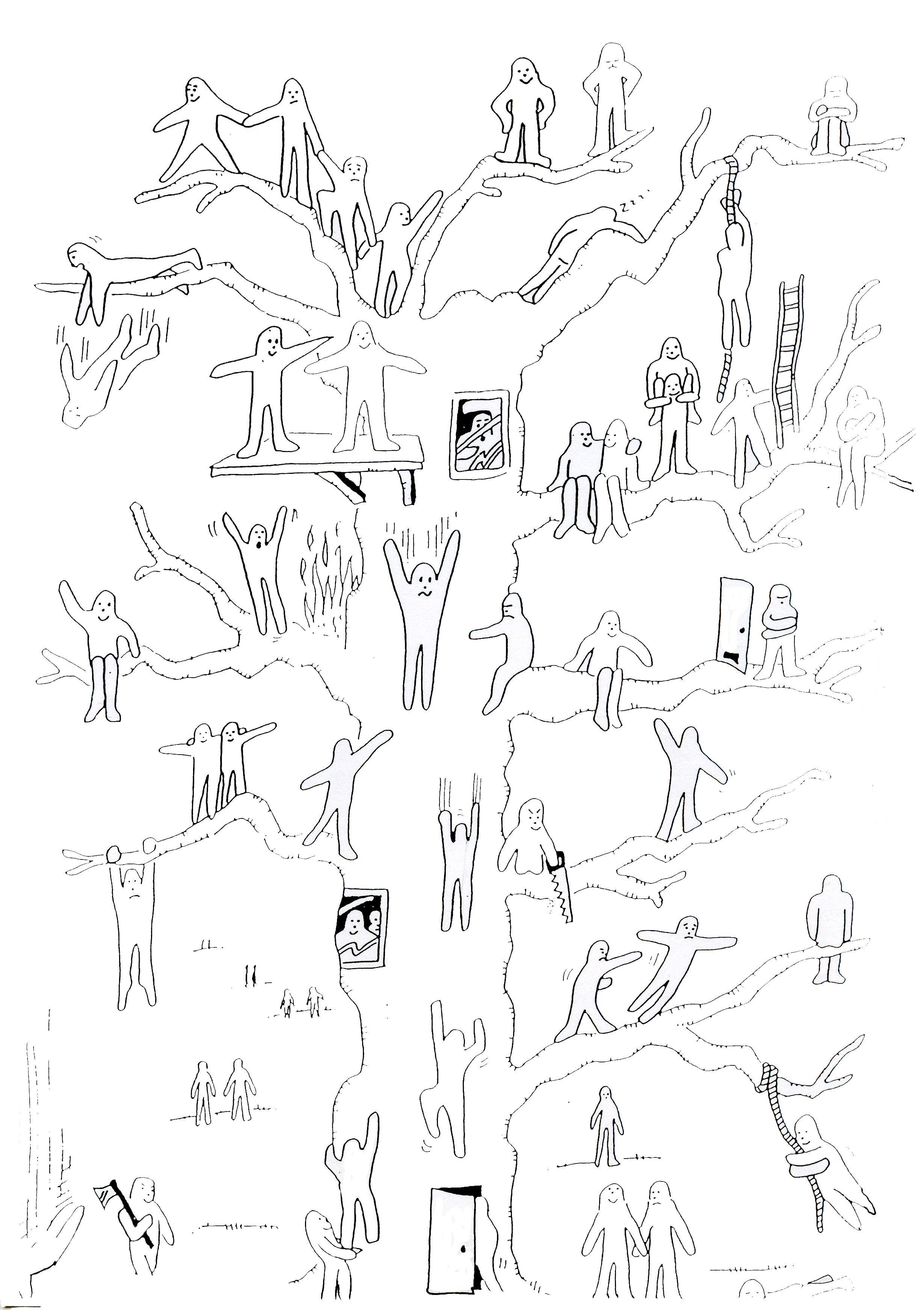
I often recommend visuals as a conversation-starter, for example. Some of the most revealing moments in my research haven't come from a spoken answer to a question, but were prompted by a drawing, a photo, or a shape on a page. I regularly use tools like ‘blob trees’, which are simple line drawings of figures in different postures and expressions. The question is tailored to the research or situation; I have asked people to choose figures that show how they feel about learning, or how their first weeks at university were. You can also use these and other visual prompts as a ‘check-in’ at the start, middle or end of a lesson to gauge mood or confidence in a given topic - but remember that the point isn’t which blob or emoji they choose, it’s what they say about it. It’s a tool to open up a different kind of conversation, rather than an answer in itself.
Visuals can work particularly well if they don’t come from us, but are found and shared by the students. Ask students to bring a photo that represents an experience, for example, or do a stick figure drawing of how they understand a concept, rather than describe it from a standing start. The instruction "show me" can get you so much further than "tell me," especially when someone is still working out how to put something into words. This is also when phones can become an asset, not just a distraction - if they can’t describe something, perhaps they can show you a picture or find a video to bridge the communication gap, for now?



Map the journey, together
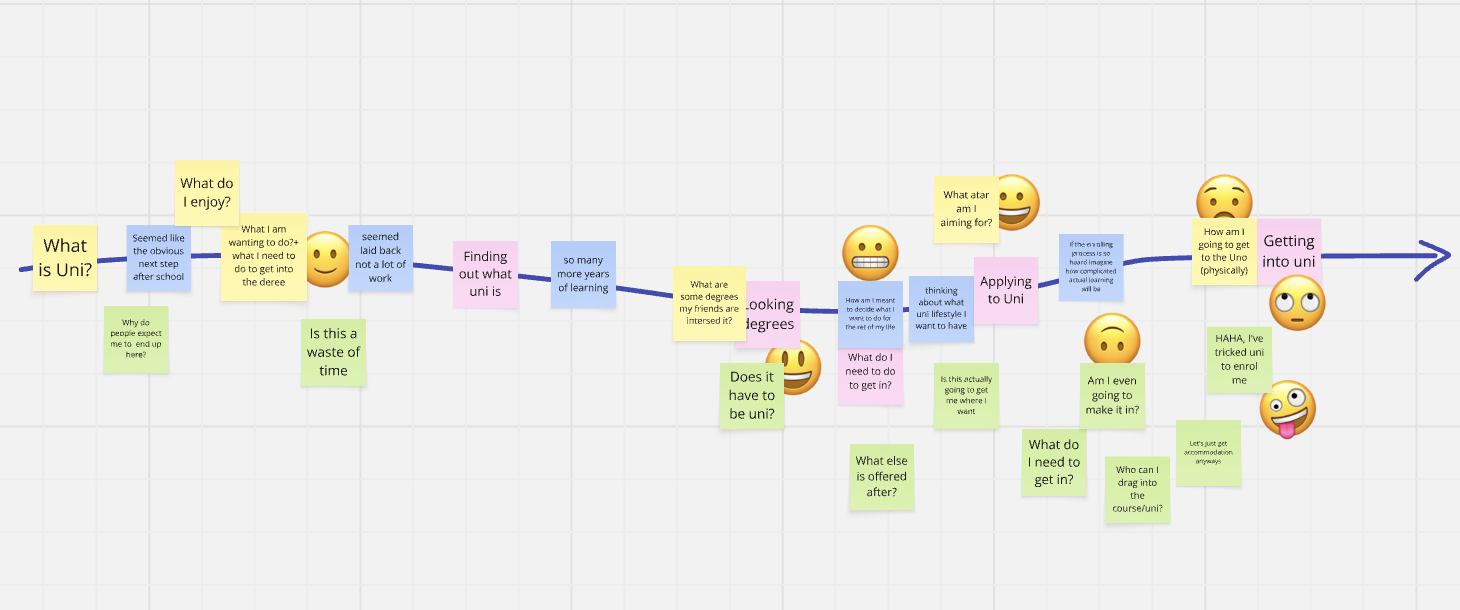
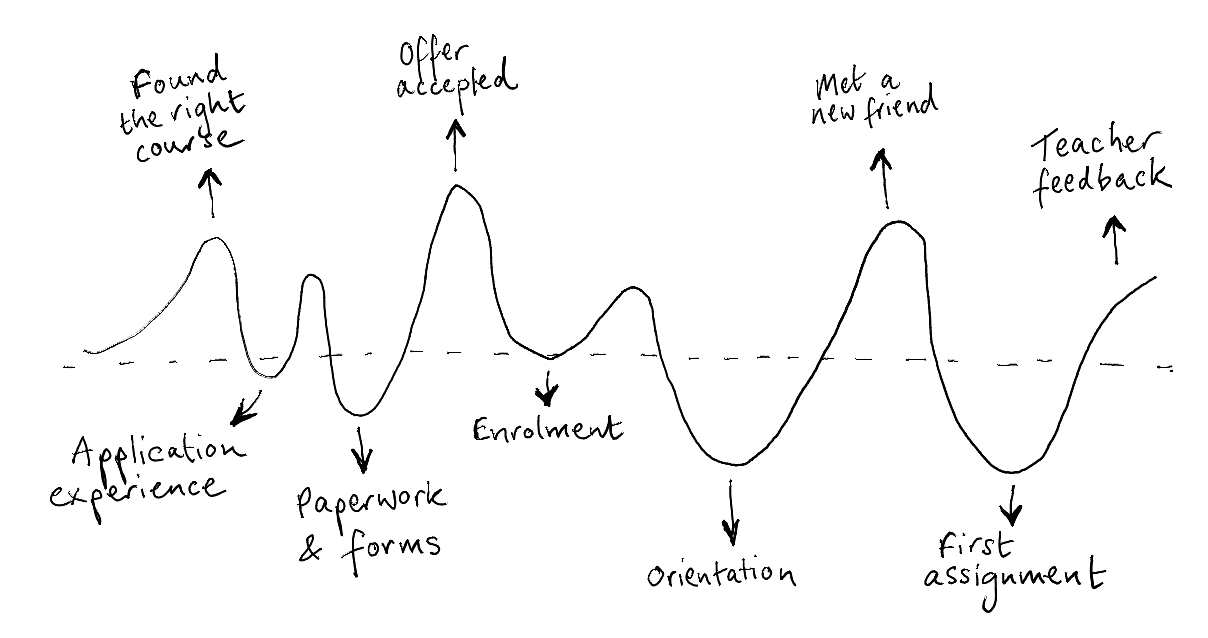
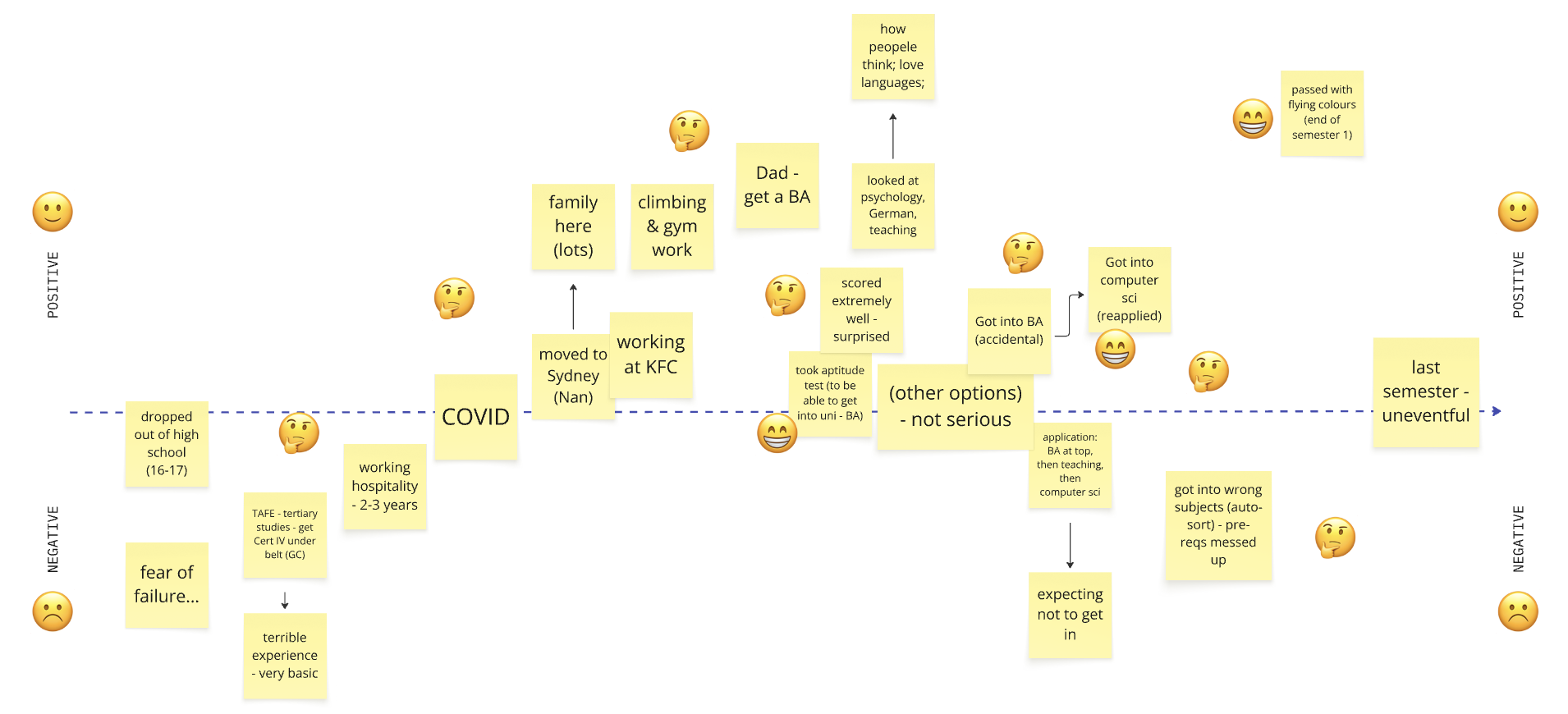
Some of the stories that matter most aren't a single moment - they're a long, multi-layered and non-linear decision, like the one that led a student to choose to study in the first place. Trying to capture that in a single question ("why did you decide to study here?") usually gets a neat, rational answer that might make perfect sense, but doesn’t give you much insight about the uncomfortable bumps and unexpected highlights along the way.
Instead, I work with students to literally map it out. We'll draw a timeline or a journey line together, on paper or an online whiteboard, noting decisions, turning points, people who influenced them, moments of doubt. The visual helps keep the conversation going, giving structure to something that would otherwise be hard to narrate in order. It also puts the student in control of what gets included and what doesn't, and sometimes has an added benefit of showing the student their own narrative in a way they hadn’t thought about before. Great conversations benefit the talkers and listeners, so everyone gets something out of it.
Tips for better conversations, whoever you are
You don't need to be running a research project to use any of this. Here are a few things I'd suggest, whether you're in student support, the classroom, or research:
Offer more than one way to answer: try a drawing, a written note, or a scale or sketch they can point to.
Ask "show me" as often as "tell me", and take the pressure off finding the right words. If the issue is technical, let them demonstrate to you where the problem is.
Let silence sit for a bit. A quiet student isn’t always disengaged - they’re often forming what they want to say, so give them a minute (try putting your hand over your mouth to resist interruption temptation!).
Hand over some control - let the student choose where to start, or what to skip, especially if it’s a sensitive conversation.
Treat the story as data, not a distraction or detour. When a student goes on a tangent, there may be an important insight sitting somewhere down that road. Even if there isn’t, you can build trust by simply listening.
Clare and I will be unpacking these techniques and more at the IEAA Teaching and Learning Forum, in a hands-on workshop on designing better student conversations for both classroom and student support contexts. If you think you could be having better conversations, we would love to see you (and talk with you!) there.